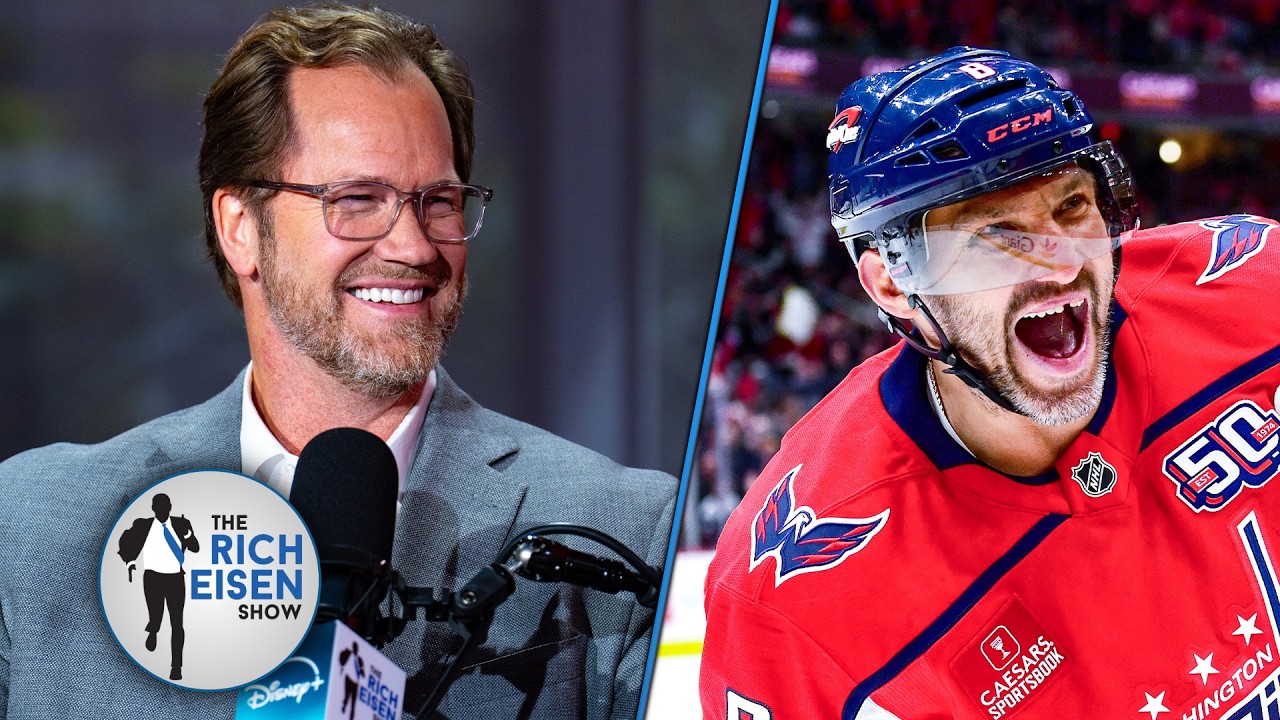
Pronger on What Ovechkin Means
Hockey Hall of Famer Chris Pronger joined the show to talk about who is the must-watch player in the NHL right now, what Alex Ovechkin's goals record means, and the physical toll of an 18-year career.
Pronger's list of must-watch players is stacked. Macklin Celebrini in San Jose comes every single night with a motor. Nathan MacKinnon is appointment television. Connor McDavid in Edmonton is obvious. And Sidney Crosby, at what Pronger called his advanced age of 38, still preparing meticulously, still scoring at the same clip, still showing up the same way game after game. Father Time is undefeated, but Sid keeps clipping along.
On Ovechkin, Pronger's first impression years ago was speed, power, and passion. The joy Ovechkin gets from strapping on his skates is infectious, similar to what Brady Tkachuk brings at a different physical register. The fact that Ovechkin broke Gretzky's record is something Pronger thought might never happen again. Twenty-plus years of 40-plus goals a season, with a physical style of play, and Ovechkin hardly missed games. The year he broke his leg cost him three or four weeks. Outside of that, maybe 13 or 14 total games missed over the career.
Who breaks that record next? Pronger's answer was essentially nobody in the near term. The consistency and longevity required are the same mountain Crosby has been climbing for two decades.
Then the conversation turned to Pronger's own body. Eighteen years of playing. Sixteen surgeries. A new knee. A list that reads like a medical inventory: wrist, three hand surgeries, five on the right knee, one left knee, foot, back, jaw. The hardest hit he ever took came right before the 2004 lockout in Edmonton. Ethan Moreau caught him after Pierre Turgeon stepped out of the way. The puck flipped, Pronger put his head down to knock it flat, looked up too late, took the train, and popped right back up.
Rich asked if he ever dropped the gloves and immediately regretted it. Pronger's answer was classic enforcer economics: if you are taking your gloves off, you better be mad or have a purpose. Otherwise you are in trouble.
On why hockey allows fighting when no other sport does, Pronger traced it historically. Players used to not wear helmets and carried sticks. Allowing a five-minute fight was preferable to a two-handed chop across the head. Beyond the history, Pronger framed fighting as a pressure valve. Stars get protected. Tension gets released. Messages get sent. He pointed to Auston Matthews taking a recent hit, and Pronger's read: you do not go after the role player who delivered it. You go after the other team's star, and the message lands quickly.
The cleanest line in the interview came from a Kelly Chase story Eddie Olczyk told the day before on the Ice Guardians podcast. Chase went to Steve Yzerman mid-game and told him to get Probert to back off, or Chase would handle it with Yzerman himself. The conversation tends to end right there.
Watch the full interview with Chris Pronger on The Rich Eisen Show, streaming live on Disney+ weekdays Noon-3PM ET.
Adapted from the original segment on The Rich Eisen Show. How we cover the show.


